
Looking for the best under desk treadmill? Read this in-depth review covering benefits, drawbacks, brand comparisons, real-life user stories, and buying tips to find the perfect walking pad for your workspace.
Under desk treadmills, often called walking pads, have become increasingly popular among remote workers, students, and anyone who spends long hours at a desk. These compact machines allow you to walk at a gentle pace while working, transforming sedentary time into an opportunity for movement.
In this comprehensive guide, we’ll cover why people use under desk treadmills, their pros and cons, detailed brand comparisons, real-life testimonials, and tips for choosing the right model for your space and lifestyle. Let’s get started…
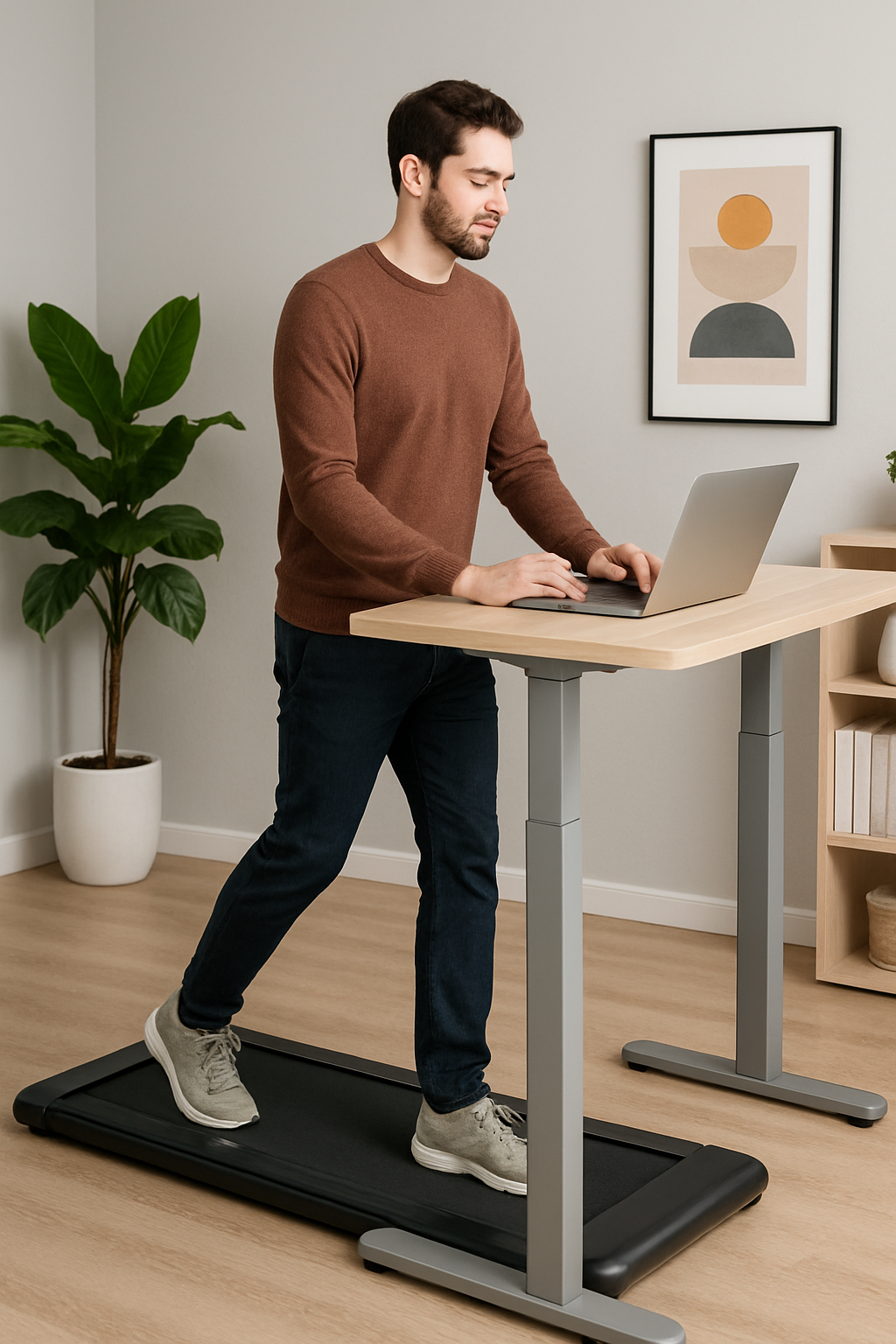
Why Do People Use Under Desk Treadmills?
- Combat sedentary lifestyle
Walking while working helps reduce the health risks associated with sitting all day, such as weight gain, poor circulation, and joint stiffness. - Boost focus and energy
Light activity increases blood flow, which can reduce fatigue and improve concentration during long workdays. - Multitask efficiently
Many users find they can take calls, answer emails, and attend virtual meetings while walking at a slow pace. - Convenience
For people with limited time or space, walking while working provides an easy way to fit more movement into the day.
Benefits of Under Desk Treadmills
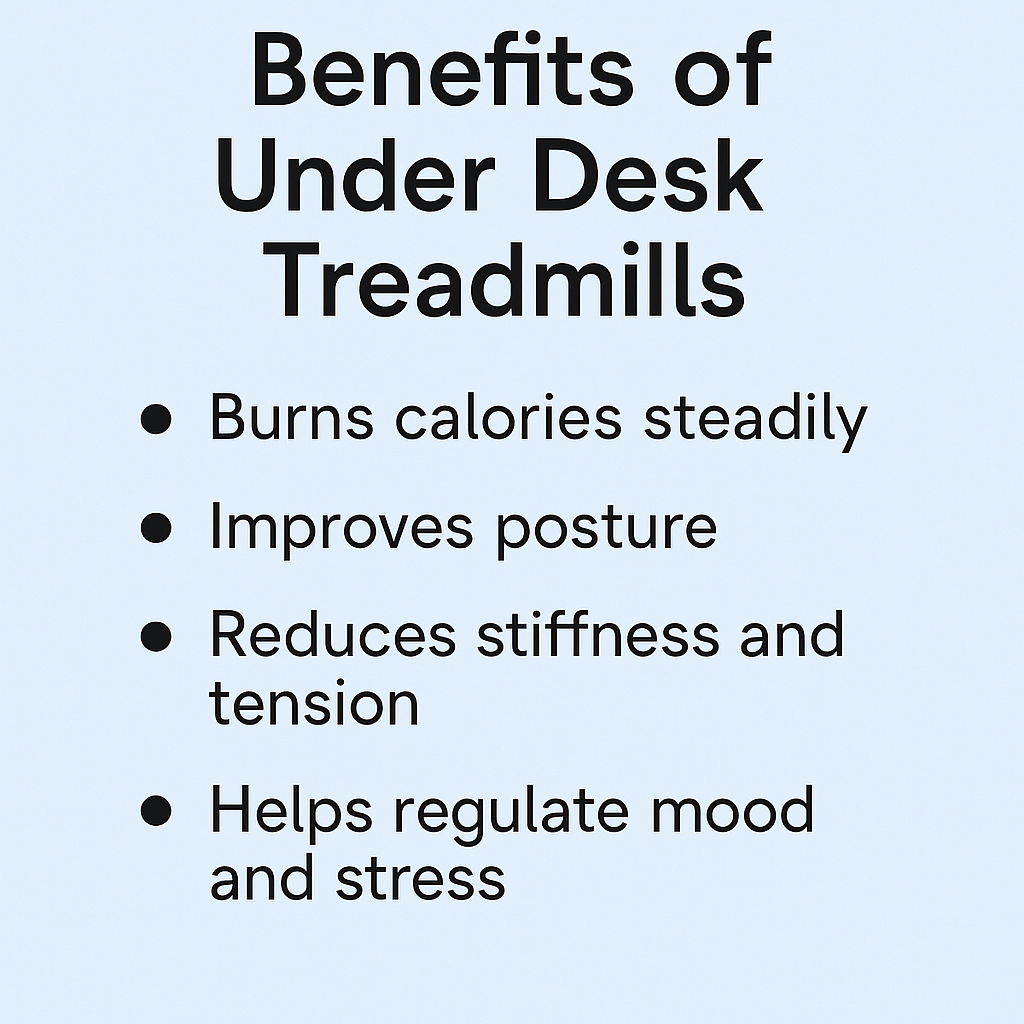
- Health Benefits
- Burns calories and supports weight management
- Improves posture when paired with an ergonomic desk setup
- Reduces stiffness and joint pain from prolonged sitting
- May lower the risk of metabolic diseases associated with inactivity
- Workplace Benefits
- Keeps energy levels steady during the day
- Can boost creativity by encouraging low-level physical activity
- Helps regulate mood and reduce anxiety through steady movement
- Lifestyle Benefits
- Allows you to exercise without leaving your workspace
- Fits into small apartments and home offices due to compact design
- Provides a sense of accomplishment when combining work and wellness
Cons of Under Desk Treadmills
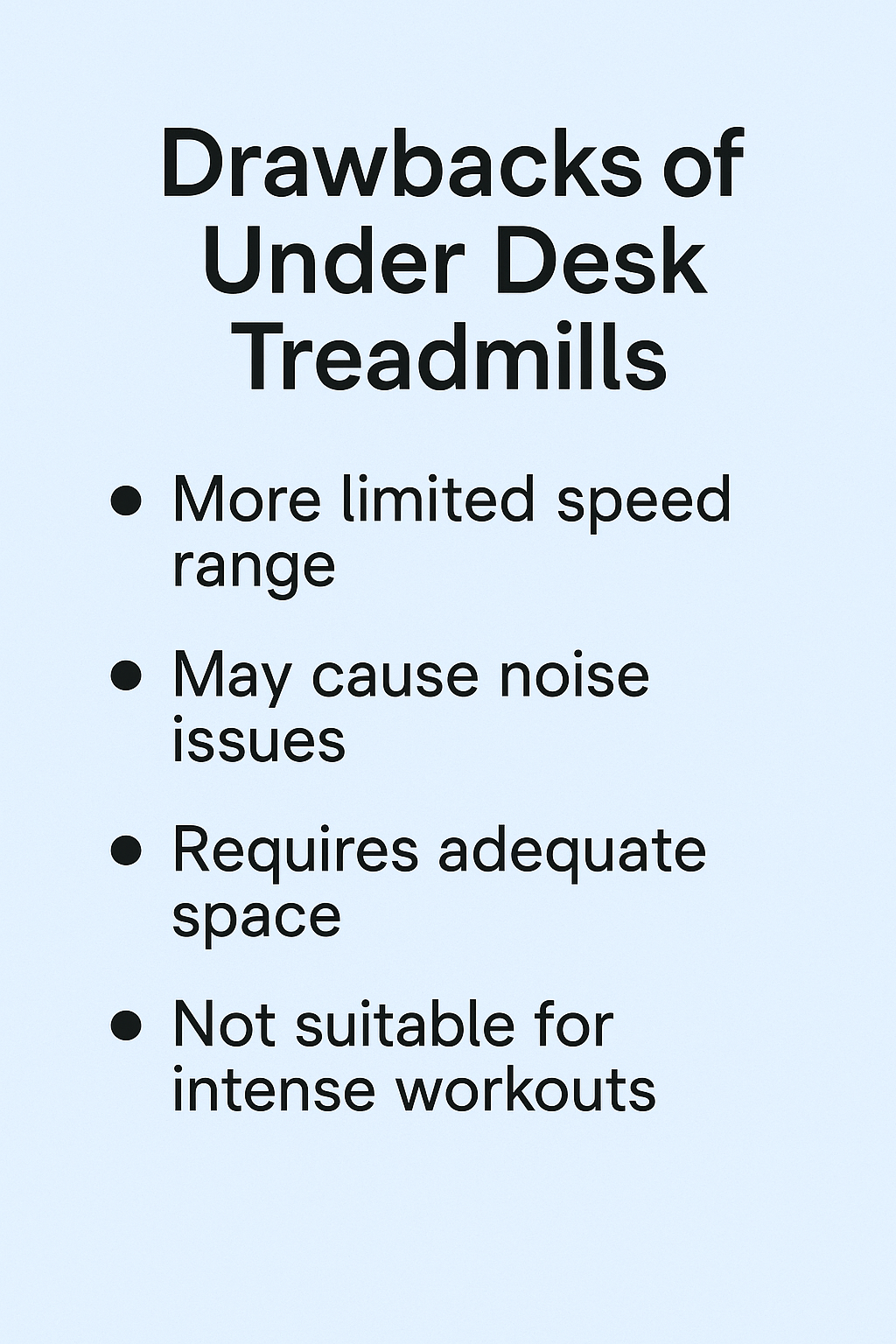
- Takes time to adjust to typing or using a mouse while walking
- Produces some noise, which may not be ideal in shared workspaces
- Requires an adjustable standing desk for proper ergonomics
- Can be costly compared to simply walking outdoors
- Limited workout intensity, walking pads are best for light walking, not running
Are Walking Pads and Under Desk Treadmills the Same?
The terms are often used interchangeably, but there are slight distinctions! Let’s discuss them:
- Walking Pad: A foldable, slim treadmill designed specifically for walking at low speeds. Often marketed for under desk use or small spaces.
- Under Desk Treadmill: A treadmill without handles, intended to fit under a standing desk. Usually built for continuous, low-speed walking.
In practice, most people consider them the same, but “walking pad” emphasizes portability, while “under desk treadmill” emphasizes work integration.
Who Should Consider an Under Desk Treadmill?
- Remote workers who spend 6–8+ hours at a desk
- People struggling to meet daily step goals
- Those with back pain or stiffness from sitting all day
- Anyone looking to incorporate movement without setting aside extra workout time
Who Should Avoid an Under Desk Treadmill?
- People with very limited space or low ceilings
- Workers whose jobs require high levels of typing precision at all times
- Individuals who already struggle with balance
- Those who dislike multitasking and prefer exercise as a separate activity
Key Features to Look for in an Under Desk Treadmill
1. Speed Range
Most models have a maximum speed of 3–4 mph. Look for adjustable speeds to fit both casual walking and brisk movement.
2. Noise Level
Quieter motors are essential if you’re on calls or working with others nearby.
3. Size and Storage
Some treadmills fold in half, making them easier to store under beds or couches when not in use.
4. Weight Capacity
Check the weight limit to ensure durability and safety.
5. Console and Tracking
Basic models display speed and steps, while advanced ones may sync with apps for detailed tracking.
6. Durability and Warranty
Look for solid construction and a warranty that covers at least one year of use.
Brand-Specific Comparisons
DeerRun Q1 Mini
- Best for beginners: Affordable and straightforward.
- Pros: Compact, lightweight, easy to move.
- Cons: Does not fold; walking deck may feel short for taller users.
- User Story: A graduate student used the Q1 Mini to add 5,000 steps during study sessions. They found it small enough to slide into the corner when not in use but noted the shorter deck required more attention to foot placement.
WalkingPad C2
- Best for tight spaces: Extremely compact and foldable.
- Pros: Quiet operation, folds in half, easy to store under a couch or bed.
- Cons: Weight limit around 220 lbs, smaller deck size, app connection can be unreliable.
- User Story: A remote worker reported using the C2 for over 1,200 km of walking across six months, averaging three hours a day at 3 mph. They praised its reliability and compact size, but mentioned that taller colleagues found the deck narrow.
WalkingPad A1 Pro
- Best premium option: Durable and higher weight capacity (up to 300 lbs).
- Pros: Sturdy build, folds neatly, remote and app controls, automatic speed adjustment.
- Cons: Small walking surface for some users, limited to brisk walking speeds.
- User Story: A digital marketer used the A1 Pro during winter to consistently hit 10,000 steps per day without leaving home. They felt it was worth the price for durability and daily use, but admitted they had to lower their desk slightly to accommodate it.
Comparison Table: Popular Under Desk Treadmills
| Feature | DeerRun Q1 Mini | WalkingPad C2 | WalkingPad A1 Pro |
|---|---|---|---|
| Price Range | Budget-friendly | Mid-range | Higher-end |
| Foldable | No | Yes (folds in half) | Yes (folds in half) |
| Weight Capacity | ~220 lbs | ~220 lbs | ~300 lbs |
| Deck Size | Shorter | Slim, compact | Slightly wider but still compact |
| Noise Level | Low | Very low | Low |
| Best For | Beginners, small spaces | Apartment dwellers, portability | Daily heavy use, durability |
| Key Drawback | Non-foldable, short deck | Narrow deck, app issues | Smaller walking surface for some |
User Case Studies: Real-Life Experiences
- Case Study 1 – Remote Copywriter
A freelance writer reported using a walking pad daily for three months. They walked 8,000 steps before lunch while drafting articles, which helped reduce back stiffness and improved focus. They noted that editing documents was harder while walking, so they switched between sitting and walking depending on the task. - Case Study 2 – Tech Professional
A software engineer shared that their under desk treadmill allowed them to easily reach 12,000 steps per day during long coding sessions. They alternated between walking slowly during meetings and sitting when debugging required more precision. - Case Study 3 – Stay-at-Home Parent
A parent used the treadmill during nap times to stay active. They appreciated the compact folding design, which could be stored in a closet when not in use. They said it helped maintain both energy and mood during a busy day of childcare. - Case Study 4 – Teacher Working From Home
During the pandemic, a teacher used an under desk treadmill to avoid long sedentary hours while grading papers and attending online meetings. They reported weight loss of 10 pounds over six months without additional workouts.
Buying Guide: What to Look For
- Space and Storage – Measure your workspace to ensure compatibility.
- Weight Limit – Choose a model that supports your body weight comfortably.
- Noise Level – Opt for quieter motors if you take calls or live with others.
- Foldability – If storage is a priority, consider folding designs like the C2 or A1 Pro.
- Budget – Entry-level models start around $300; premium ones can exceed $700.
- Warranty – Look for at least a one-year warranty on motor and frame.
FAQs
How many hours per day should I use an under desk treadmill?
Most users find 1–3 hours spread across the day manageable without fatigue.
Can you lose weight using one?
Yes, steady calorie burn contributes to weight management when combined with a healthy diet.
Do they replace workouts?
No—they are best seen as a supplement to strength training, cardio, or stretching.
Can you use them barefoot?
Light barefoot walking is possible, but supportive shoes are recommended for long sessions.
Are they safe?
Yes, when used at recommended walking speeds, under desk treadmills are generally very safe.
Final Verdict
Under desk treadmills provide an excellent solution for anyone who wants to stay active while working. They won’t replace your gym workouts, but they offer meaningful daily movement without sacrificing productivity.
- Choose the DeerRun Q1 Mini if you want a budget-friendly, reliable starter treadmill.
- Pick the WalkingPad C2 if you live in a small space and value portability.
- Invest in the WalkingPad A1 Pro if you want a sturdier, premium option for daily use.
With the right choice, an under desk treadmill can transform sedentary office hours into active, health-promoting time.
Thanks for reading Under Desk Treadmill Review: The Ultimate Guide with Comparisons and User Stories on burlap+blue!